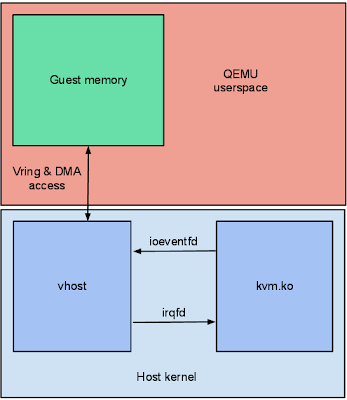
本文将结合qemu与linux源码,解析vhost中ioeventfd与irqfd相关内容。
prerequisite
overview
ioeventfd与kick绑定,irqfd与中断绑定
ioeventfd:
qemu利用KVM_IOEVENTFD ioctl,将ioeventfd与guest kick寄存器的地址(pio/mmio地址)和vq index的值绑定,传给kvm
当kvm检测到guest往kick寄存器写入vq index后,写eventfd通知vhost
qemu利用VHOST_SET_VRING_KICK ioctl,将ioeventfd传给vhost,vhost就会poll ioeventfd的写
当vhost poll到ioeventfd的写后,就会开始从avai ring中拉取请求,处理完io请求后,更新used ring,最后给guest注入中断(需要借助于irqfd)
irqfd:
qemu利用VHOST_SET_VRING_CALL ioctl,将irqfd传给vhost
vhost在更新完used ring后,写eventfd通知kvm注入中断
qemu利用KVM_IRQFD ioctl,将irqfd与vq的中断绑定,传给kvm,kvm就会poll irqfd的写
当kvm poll到irqfd的写后,就会根据中断路由信息,给guest注入中断
ioeventfd qemu侧ioeventfd的关联 1 2 3 4 5 6 7 8 9 10 11 12 virtio_bus_start_ioeventfd └── virtio_device_start_ioeventfd_impl[start_ioeventfd] ├── event_notifier_set(&vq->host_notifier) └── memory_region_transaction_commit └── address_space_update_ioeventfds └── address_space_add_del_ioeventfds ├── kvm_io_ioeventfd_add[eventfd_add] │ └── kvm_set_ioeventfd_pio │ └── kvm_vm_ioctl(kvm_state, KVM_IOEVENTFD, &kick) └── kvm_mem_ioeventfd_add[eventfd_add] └── kvm_set_ioeventfd_mmio └── kvm_vm_ioctl(kvm_state, KVM_IOEVENTFD, &iofd)
1 2 3 4 vhost_virtqueue_start ├── event_notifier_get_fd(virtio_queue_get_host_notifier(vvq)) └── vhost_kernel_set_vring_kick[vhost_set_vring_kick] └── vhost_kernel_call(dev, VHOST_SET_VRING_KICK, file)
1 2 3 4 5 6 struct VirtQueue { ... EventNotifier host_notifier; ... }
由上述代码可知,qemu侧通过host_notifier的ioeventfd,将vhost与kvm关联了起来;
vhost负责poll ioeventfd
kvm负责写ioeventfd来通知vhost guest的kick操作
kvm侧ioeventfd处理 参考Dive into ioeventfd(KVM side) mechanism 即可。
vhost侧ioeventfd处理 1 2 3 4 5 6 7 8 9 10 11 12 13 14 15 16 17 18 19 20 21 22 23 24 25 26 27 28 29 long vhost_vring_ioctl (struct vhost_dev *d, unsigned int ioctl, void __user *argp) { ... switch (ioctl) { ... case VHOST_SET_VRING_KICK: if (copy_from_user(&f, argp, sizeof f)) { r = -EFAULT; break ; } eventfp = f.fd == VHOST_FILE_UNBIND ? NULL : eventfd_fget(f.fd); if (IS_ERR(eventfp)) { r = PTR_ERR(eventfp); break ; } if (eventfp != vq->kick) { pollstop = (filep = vq->kick) != NULL ; pollstart = (vq->kick = eventfp) != NULL ; } else filep = eventfp; break ; ... } ... if (pollstart && vq->handle_kick) r = vhost_poll_start(&vq->poll, vq->kick); ... }
qemu利用VHOST_SET_VRING_KICK ioctl,将ioeventfd传给vhost,然后vhost就开始poll ioeventfd(vhost_poll_start)。
1 2 3 4 5 6 7 8 9 10 11 12 13 14 15 16 17 18 19 20 int vhost_poll_start (struct vhost_poll *poll, struct file *file) { __poll_t mask; if (poll->wqh) return 0 ; mask = vfs_poll(file, &poll->table); if (mask) vhost_poll_wakeup(&poll->wait, 0 , 0 , poll_to_key(mask)); if (mask & EPOLLERR) { vhost_poll_stop(poll); return -EINVAL; } return 0 ; } EXPORT_SYMBOL_GPL(vhost_poll_start);
当vhost poll到ioeventfd写后,就会触发vhost_poll_wakeup回调。
1 2 3 4 5 6 vhost_poll_wakeup └── vhost_poll_queue └── vhost_vq_work_queue └── vhost_worker_queue ├── llist_add(&work->node, &worker->work_list) └── vhost_task_wake(worker->vtsk)
worker->vtsk又会如何操作呢?且看worker->vtsk的初始化情况以及worker->vtsk的执行函数吧。
1 2 3 4 5 6 7 8 9 10 11 12 13 14 15 16 17 18 19 20 21 22 23 24 25 26 27 28 29 30 31 32 33 34 35 36 37 38 39 40 41 42 43 44 45 46 47 48 49 static struct vhost_worker *vhost_worker_create (struct vhost_dev *dev) { struct vhost_worker *worker ; struct vhost_task *vtsk ; char name[TASK_COMM_LEN]; int ret; u32 id; worker = kzalloc(sizeof (*worker), GFP_KERNEL_ACCOUNT); if (!worker) return NULL ; snprintf (name, sizeof (name), "vhost-%d" , current->pid); vtsk = vhost_task_create(vhost_worker, worker, name); if (!vtsk) goto free_worker; mutex_init(&worker->mutex); init_llist_head(&worker->work_list); worker->kcov_handle = kcov_common_handle(); worker->vtsk = vtsk; ... } static bool vhost_worker (void *data) { struct vhost_worker *worker = struct vhost_work *work , *work_next ; struct llist_node *node ; node = llist_del_all(&worker->work_list); if (node) { __set_current_state(TASK_RUNNING); node = llist_reverse_order(node); smp_wmb(); llist_for_each_entry_safe(work, work_next, node, node) { clear_bit(VHOST_WORK_QUEUED, &work->flags); kcov_remote_start_common(worker->kcov_handle); work->fn(work); kcov_remote_stop(); cond_resched(); } } return !!node; }
在初始化过程中,vhost会创建一个名为vhost-$pid的内核线程,其中$pid是QEMU进程的pid。该线程被称为“vhost工作线程”。vhost_worker,而vhost_worker就会触发vq->handle_kick的回调。
那么vhost_poll与vq->handle_kick等又是如何初始化的呢?
1 2 3 4 5 6 7 8 9 10 11 12 13 14 15 16 17 18 19 20 21 22 23 24 25 26 27 28 29 30 31 32 33 34 35 36 37 38 39 40 41 void vhost_dev_init (struct vhost_dev *dev, struct vhost_virtqueue **vqs, int nvqs, int iov_limit, int weight, int byte_weight, bool use_worker, int (*msg_handler)(struct vhost_dev *dev, u32 asid, struct vhost_iotlb_msg *msg)) { struct vhost_virtqueue *vq ; int i; dev->vqs = vqs; dev->nvqs = nvqs; mutex_init(&dev->mutex); dev->log_ctx = NULL ; dev->umem = NULL ; dev->iotlb = NULL ; dev->mm = NULL ; dev->iov_limit = iov_limit; dev->weight = weight; dev->byte_weight = byte_weight; dev->use_worker = use_worker; dev->msg_handler = msg_handler; init_waitqueue_head(&dev->wait); INIT_LIST_HEAD(&dev->read_list); INIT_LIST_HEAD(&dev->pending_list); spin_lock_init(&dev->iotlb_lock); xa_init_flags(&dev->worker_xa, XA_FLAGS_ALLOC); for (i = 0 ; i < dev->nvqs; ++i) { vq = dev->vqs[i]; vq->log = NULL ; vq->indirect = NULL ; vq->heads = NULL ; vq->dev = dev; mutex_init(&vq->mutex); vhost_vq_reset(dev, vq); if (vq->handle_kick) vhost_poll_init(&vq->poll, vq->handle_kick, EPOLLIN, dev, vq); } }
vhost设备初始化时,会为每个vq调用vhost_poll_init来初始化vhost_poll与vq->handle_kick等内容。
1 2 3 4 5 6 7 8 9 10 11 12 13 14 15 16 17 18 19 20 21 22 23 24 void vhost_poll_init (struct vhost_poll *poll, vhost_work_fn_t fn, __poll_t mask, struct vhost_dev *dev, struct vhost_virtqueue *vq) { init_waitqueue_func_entry(&poll->wait, vhost_poll_wakeup); init_poll_funcptr(&poll->table, vhost_poll_func); poll->mask = mask; poll->dev = dev; poll->wqh = NULL ; poll->vq = vq; vhost_work_init(&poll->work, fn); } static void vhost_poll_func (struct file *file, wait_queue_head_t *wqh, poll_table *pt) { struct vhost_poll *poll ; poll = container_of(pt, struct vhost_poll, table); poll->wqh = wqh; add_wait_queue(wqh, &poll->wait); }
1 2 3 4 5 6 7 8 9 10 struct vhost_virtqueue { struct vhost_dev *dev ; struct vhost_worker __rcu *worker ; ... struct vhost_poll poll ; vhost_work_fn_t handle_kick; ... }
总结下vhost侧poll ioeventfd的流程:
vhost_poll_func会让vhost poll ioeventfd,加入到file’s wait queue中kvm写ioeventfd通知vhost
vhost回调vhost_poll_wakeup,将work加入到workqueue中,唤醒vhost工作线程
vhost工作线程回调vq->handle_kick,处理vq中的io请求
irqfd qemu侧irqfd的关联 1 2 3 4 5 6 7 virtio_pci_set_guest_notifiers └── kvm_virtio_pci_vector_use └── kvm_virtio_pci_irqfd_use ├── virtio_queue_get_guest_notifier └── kvm_irqchip_add_irqfd_notifier_gsi └── kvm_irqchip_assign_irqfd └── kvm_vm_ioctl(s, KVM_IRQFD, &irqfd)
1 2 3 4 5 vhost_virtqueue_start └── vhost_virtqueue_mask ├── event_notifier_get_wfd(virtio_queue_get_guest_notifier(vvq)) └── vhost_kernel_set_vring_call[vhost_set_vring_call] └── vhost_kernel_call(dev, VHOST_SET_VRING_CALL, file)
1 2 3 4 5 6 struct VirtQueue { ... EventNotifier guest_notifier ... }
由上述代码可知,qemu侧通过guest_notifier的irqfd,将vhost与kvm关联了起来;
kvm负责poll irqfd,然后给vm注入中断
vhost在更新完used ring后,写irqfd来通知kvm注入中断
kvm侧irqfd处理 参考Dive into irqfd(KVM side) mechanism 即可。
vhost侧irqfd处理 1 2 3 4 5 6 7 8 9 10 11 12 13 14 15 16 17 18 19 20 21 22 23 long vhost_vring_ioctl (struct vhost_dev *d, unsigned int ioctl, void __user *argp) { ... switch (ioctl) { ... case VHOST_SET_VRING_CALL: if (copy_from_user(&f, argp, sizeof f)) { r = -EFAULT; break ; } ctx = f.fd == VHOST_FILE_UNBIND ? NULL : eventfd_ctx_fdget(f.fd); if (IS_ERR(ctx)) { r = PTR_ERR(ctx); break ; } swap(ctx, vq->call_ctx.ctx); break ; ... } ... }
qemu调用VHOST_SET_VRING_CALL,将irqfd传递给vhost
1 2 3 4 5 6 7 8 void vhost_signal (struct vhost_dev *dev, struct vhost_virtqueue *vq) { if (vq->call_ctx.ctx && vhost_notify(dev, vq)) eventfd_signal(vq->call_ctx.ctx, 1 ); } EXPORT_SYMBOL_GPL(vhost_signal);
vhost在处理完io请求,并更新used ring后,调用vhost_signal,触发irqfd的写;kvm poll到后,就会给vm注入中断。